Capital Cyle Account of the South African Construction and Cement Industry.
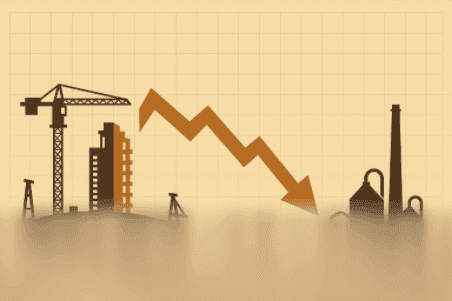
The South African construction sector has undergone one of the most severe capital destruction cycles of any emerging market industry in recent memory. From a peak-to-trough (2016 to 2019) decline of 35% in real output, mass bankruptcies of iconic firms and cement running at barely 55–60 % of capacity.
We used to talk about the “Big Five” in the local construction industry, which referred to companies, WBHO (Wilson Bayly Holmes-Ovcon), Murray & Roberts, Basil Read, Group Five and Aveng. The multiyear downturn due to weak fixed capital formation, constrained public spend and muted private investment has evaporated all talk of the “Big Five” and we now only hold WBO in high esteem.
I. The Peak: The 2010 FIFA World Cup and the Great Overreach
To understand where we are in the cycle, one must first appreciate the magnitude of the preceding boom.
The period from roughly 2005 to 2011 was a golden era for South African construction. The government's infrastructure programme to host the 2010 FIFA World Cup catalysed an unprecedented wave of spending – new stadiums, roads, airports, the Gautrain rapid rail link and the massive Medupi and Kusile power stations. Then, construction companies were flush with multi-billion-rand order books.
Cement producers mirrored the fortunes of contractors. PPC, the market's cement darling, saw domestic cement sales peak at 15 million tonnes in 2008. Capacity utilisation was high, pricing power was strong and returns were attractive enough to attract new entrants, though they arrived at the peak of the cycle. Sephaku Cement (backed by Dangote) and Mamba Cement (backed by Chinese firm Tangshan Jidong) both entered the market in 2010, adding millions of tonnes of new capacity, as did the Cemza plant at Coega (investment in 2010). The industry's installed cement capacity expanded to over 20 million tonnes per annum, well above what the market could absorb once the infrastructure wave receded.
This is the classic capital cycle dynamic at work: a period of elevated returns that attracts capital, which in turn seeds the conditions for future oversupply and margin compression. The construction industry's version was particularly acute because the demand driver, government, whose infrastructure spending for a mega-event (2010 Fifa World Cup) was inherently temporary. The supply of new capacity, both in contracting and cement, was built to serve a demand level that was never going to be sustained.
II. The Bust: A Decade of Capital Destruction
Contractor Carnage
The post-World Cup hangover was brutal and prolonged. As government infrastructure spending dried up, the competitive landscape for contractors became a death spiral: low volumes, pricing pressure, companies taking on more risk to win contracts at thin margins, generating losses, eroding balance sheets and ultimately defaulting on obligations. What makes the South African case particularly instructive is that this wasn't merely a cyclical correction, it was compounded by structural headwinds:
- Government late payments and non-payment which the Master Builders South Africa (national representative body in the building and construction industry) described as the single greatest challenge facing the industry.
- The “construction mafia” – extortion networks that hold sites to ransom, demanding subcontracting and labour allocation on threat of violence.
- Competition Commission investigations into price-fixing collusion during the 2010 build-up, resulting in fines and reputational damage.
- Eskom's inability to complete Medupi and Kusile on time and on budget, severely disrupting construction cash flows and creating contested liability claims.
- A stagnating South African economy under poor governance that saw private sector investment evaporate.
The result was an almost unbroken sequence of corporate failures among once-dominant firms. The scale of destruction deserves emphasis: by the time Murray & Roberts filed for voluntary business rescue in November 2024, it brought to a close a process that had systematically eliminated nearly every major listed contractor from the competitive landscape.
Company | Fate |
Basil Read | Business rescue – June 2018 (R2.6bn liabilities). Effectively wound down. |
Group Five | Business rescue – March 2019. Delisted 2020. Collapsed from R8.2bn peak market cap to under R100m. |
Esor Construction | Business rescue – August 2018. Delisted from JSE June 2020. |
Liviero Group | Business rescue in 2018. Large privately held multi-disciplinary contractor. |
NMC Construction | Liquidation in 2018. Cape-based contractor. |
Consolidated Infrastructure Group (Conco) | Business rescue – November 2020. Renewable energy specialist. |
Murray & Roberts | Exited SA construction in 2016 (sold to Southern Palace). Parent company business rescue November 2024. |
Aveng | Sold Grinaker LTA to Laula Consortium 2019. Restructured; retained McConnell Dowell internationally. |
Calgro M3 | Closed construction division 2020. Retained property development activities. |
Aveng's trajectory is particularly instructive as a case study in capital cycle dynamics. From its peak market cap of R28 billion in 2008, to R602 million at the end of February 2026, a 99% value destruction in eighteen years as measured by total return. The company's survival required selling its South African construction operations entirely and refocusing on its Australian contractor McConnell Dowell, which ironically became the vehicle for a recovery that brought the stock back to relevance.
Cement: Chronic Oversupply Meets Stagnant Demand
The cement sector followed a similar trajectory, though with its own distinct character. While contractors were destroying equity through cashflow losses on projects, cement producers faced a more grinding, structural challenge: a market with over 20 million tonnes per annum of installed capacity serving demand of only 10–13 million tonnes. Capacity utilisation hovered around 55% - 60%, which was deeply destructive to returns on the capital-intensive assets required to run kilns and clinker plants.
The domestic demand backdrop was unforgiving. The peak of 15 million tonnes in 2008 collapsed to 10.8 million tonnes by 2020. Government underspending on infrastructure limited bulk cement sales, while consumer pressure, rising unemployment and a weak economy limited bagged cement sales. Making matters worse, imported cement from Vietnam flooded into the market from 2018 onwards, undercutting local producers by as much as 45%. Anti-dumping duties on Pakistani cement had stemmed one import wave in 2015 but Vietnamese cement arrived with force, predominantly targeting the informal and private building trade.
Attempts at industry rationalisation were frustrated. Merger negotiations between PPC and AfriSam which would have been the logical response to the oversupply broke down in December 2017 and despite both companies indicating openness to a future combination, it never materialised.
The new entrants, Mamba Cement (Tangshan Jidong, Chinese), Cemza (which started production at Coega in 2019) added capacity into a market that was palpably oversupplied, demonstrating the irrational exuberance of the 2007–2012 period. This very act of building new capacity at the peak of the cycle exacerbate the duration and severity of the trough.
III. The Survivors: Supply-Side Discipline and Competitive Repositioning
The Construction Contractors: A Handful of Survivors
1. WBHO Construction: The last man standing in heavy construction
WBHO emerged from the decade as arguably the strongest surviving major contractor in South Africa. Despite its share price falling 36% between 2017 and 2022, the company maintained its balance sheet integrity and continued to invest in capability. Critically, WBHO preserved its international platform in Australia and the UK, which provided both geographic diversification and cashflow insulation during the South African drought. Important to note that the business has since exited Australia. It boasts involvement in iconic projects such as, the build of Mall of Africa, Cape Town Stadium, King Shaka International Airport and the impressive Discovery building – cementing its reputation as a builder of large-scale projects. The stock gained 79% in 2024 as the recovery narrative took hold.
2. Raubex Group: Vertical Integration and Diversification as Defensive Moats
Raubex is perhaps the most instructive survivor story. From its Bloemfontein base and focus on road construction, the group deliberately diversified from roads into earthworks, infrastructure, materials supply (aggregates, bitumen) and renewable energy engineering, procurement and construction (EPC). Its vertically integrated model, spanning from raw material extraction to construction execution, provides cost advantages and revenue visibility that pure contractors cannot replicate.
3. Stefanutti Stocks: The Phoenix
Stefanutti Stocks, the multi-disciplinary contractor operating in roads, earthworks, mining, renewables, oil and gas and building, experienced severe stress during the bust years. Its share price languished below R2. Yet with the industry's recovery, it became the standout performer among listed contractors gaining 215% in 2024 alone, rising from R1.22 to R4.00. The near elimination of competitors has left Stefanutti, alongside WBHO and Raubex, as one of only a few contractors with the capability to execute large, complex infrastructure contracts. The Kusile Power Station and the Maun International Airport in Botswana are among its key project credentials.
Rudolf Fourie (CEO of Raubex) made a remarkably candid statement after the bust in 2021: “Tender activity levels are at a level that I have not seen in my 30 years in the industry. It's also the first time in my career that we have got an order book beyond three years. For the next three to five years the construction industry should be healthy. But this brings into question whether there is enough capacity to execute all this work. That is our biggest challenge”.
This is a classic capital cycle dynamic playing out: supply destruction was so severe that survivors face capacity constraints rather than excess competition.
The Cement Producers: Ownership Churn and the First Signs of Rational Capex
The cement sector has seen significant ownership change in 2024–2025, distressed assets changed hands at depressed valuations and new owners with fresh cost structures or strategic rationale are positioned to benefit from any recovery.
- Afrimat acquired Lafarge South Africa in April 2024, entering cement through consolidation. Afrimat had previously survived the construction bust by pivoting away from construction materials towards industrial minerals and bulk commodities – a model of capital cycle adaptability. Its entry into cement signals confidence in a recovery.
- Huaxin Cement (Chinese industrial conglomerate) acquired Natal Portland Cement (NPC) from InterCement at the start of 2024 and committed US$65m to expand the Simuma Plant in KwaZulu-Natal. New Chinese capital entering at the trough of the cycle, seeing a long-term infrastructure demand opportunity.
- PPC approved a R3 billion new integrated cement plant at Riebeeck in the Western Cape in March 2025, with commissioning targeted by end 2026. The 1.5 million tonne per annum facility will replace aging capacity (dating back to 1959) and modestly expand PPC's footprint.
- Sephaku, the JSE-listed vehicle of Dangote Cement's South African operations reported improved revenue and earnings in 2024 after supply disruptions in the prior year. With Dangote's deep pockets and long-term infrastructure ambition, Sephaku is positioned as a durable competitor.
The entry of Huaxin into NPC and new Chinese ownership of Mamba Cement effectively means that a meaningful portion of South African cement capacity is now controlled by Chinese industrial conglomerates with different return expectations and longer time horizons than listed South African companies. This changes the competitive calculus: a Chinese state-linked cement company may price aggressively to gain share or simply maintain capacity utilisation even at thin margins, dampening the pricing recovery that domestic producers are counting on.
IV. Investment Implications
Construction Contractors: Optionality on a Capacity-Constrained Recovery
The listed construction contractors, WBHO, Raubex, Stefanutti Stocks and Aveng offer a compelling capital cycle trade. The supply side has been ruthlessly disciplined. The order books of survivors now extend to multi-year visibility. Tender activity is at historically elevated levels. Critically, the Raubex CEO's observation about capacity constraints is confirmed by the broader reality: several of the major projects in South Africa's infrastructure pipeline may struggle to find sufficient qualified contractors to execute them.
The total return performance in 2024 reflected the early recognition of this dynamic, Stefanutti Stocks returned +215%, Raubex +99%, WBHO +84%, Aveng +49%. I believe that there is still further upside from current levels – stock reratings in the early phase of a capital cycle recovery can be substantial and there may be further to run.
Cement: Delayed Gratification with Structural Improvement
Cement is the more complex capital cycle story, excess capacity (60% utilisation, over 20 million tonnes of installed capacity) means pricing power will remain constrained until either demand absorbs excess capacity or further rationalisation occurs. PPC's new Western Cape plant is ultimately a rationalisation exercise: the 1.5 million tonne new plant replaces aging capacity at Riebeeck (about 550,000 tonnes per year) with a more cost-efficient unit. The net capacity addition to the market is modest. The logic is sound from a capital cycle perspective: old, inefficient capacity that was providing weak returns should be replaced by modern, lower-cost capacity that can generate better returns even at moderate utilisation rates.
At the stock level, PPC and Sephaku offer different risk-return profiles. PPC is the more diversified business with African operations providing growth beyond the constrained South African market but its 'Awaken the Giant' strategy involves substantial capital deployment into a still-oversupplied market. Sephaku is effectively a pure-play South African cement exposure, with Dangote providing both strategic backing and financial solidity but the stock's limited liquidity and complex holding company structure complicate the investment case. Additionally, the support from Dangote for Sephaku implies that even in a downturn companies that should exit remain standing given the backing from one of Africa’s richest men.
V. Conclusion: Where Are We in the Cycle?
Construction contractors are earlier in their recovery (order books building, margins recovering) and offer the more immediate upside. In cement, pricing recovery will follow demand absorption of excess capacity. I believe we can be in excess for a very long time in cement and would rather own the construction contractors.
The highest-quality vehicles, Raubex, WBHO and Afrimat offer the best combination of proven management through the cycle, diversified revenue and balance sheet strength to capitalise on what, for the first time in more than a decade, looks like a genuine construction renaissance in South Africa. The defining characteristic of this recovery, unlike the 2005–2010 super cycle is that it is not being built on a single mega event catalyst. It is a more gradual driven cycle underpinned by genuine infrastructure deficits, energy transition and the cumulative consequence of a decade of underinvestment. That makes it more durable, if also more modest, than what came before.
References:
- https://www.globenewswire.com/news-release/2025/6/11/3097831/28124/en/South-Africa-Cement-and-Lime-Manufacturing-Industry-Report-2025-Investment-Rises-Amidst-Oversupply-in-Cement-Manufacturing-Sector.html
- Stats SA's GDP P0441 publication
- https://www.globalcement.com/news/16963-south-african-cement-industry-s-capacity-utilisation-drops-below-60-in-2023-financial-year
- https://www.globalcement.com/magazine/articles/894-the-cement-industries-of-southern-africa
- https://www.zkg.de/en/artikel/zkg_Outlook_of_the_white_cement_industry-2467875.html#:~:text=1%20Introduction,play%20an%20important%20role...
- Bloomberg