Staying invested when markets feel uncomfortable
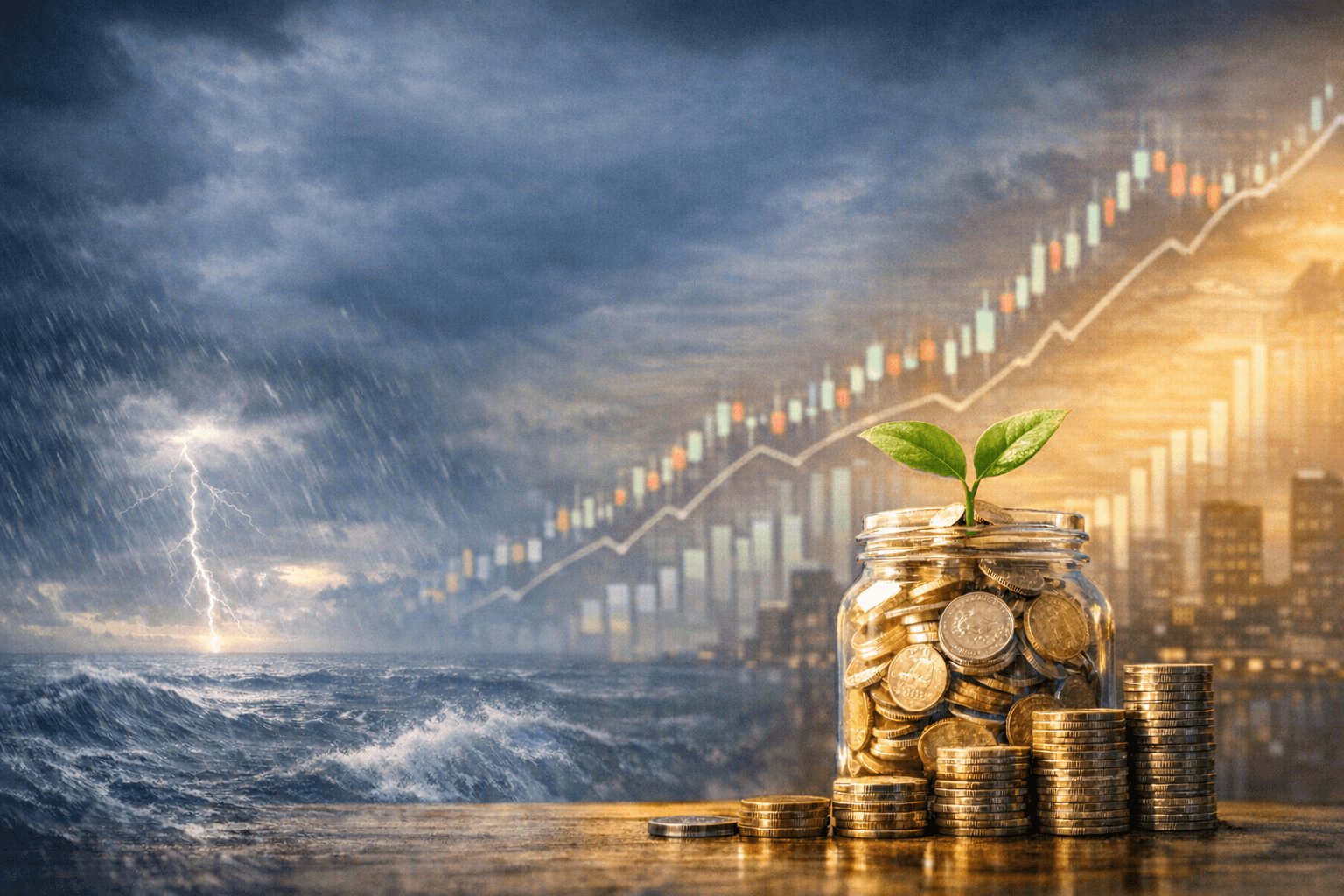
Investment success depends more on temperament than intelligence
“Why, in this age of information overload, where data gushes like a digital waterfall, is investment success still so elusive?
Today, market participants wield innovative analytical tools; web scrapers predicting weekly revenue to the decimal point, algorithms discerning emotions from tweets. Yet the enigma persists: why does Warren Buffett with his Egg McMuffins and bridge games outperform the armies of well-paid analysts with six monitors each?” Nima Shayegh, Rumi Capital Partners.
There is a question I return to often.
This is not merely a curiosity. It points to something profound about the nature of investment itself.
Buffett has spoken about it frequently, in many ways, and the answer is always the same: it is not just about intelligence. The limiting factor, he suggests, is temperament. Not the capacity to analyse, but the capacity to endure. Not the ability to find answers, but the willingness to sit with discomfort long enough to let them arrive.
Investment success, at its core, is not an intellectual challenge. It is a test of character.
Consider what this implies. The secret to staying invested when things feel deeply uncomfortable is not solely a sophisticated hedging strategy, nor a cleverly constructed portfolio of uncorrelated assets. It is something far simpler, and far more demanding: the prior acceptance that markets will fall. Not might fall. Will fall. Most investors react with something resembling genuine shock when a correction arrives, as though volatility were a malfunction in the system rather than one of its defining features. It is not a malfunction. Volatility is the entry fee for long-term compounding. To participate in the rewards, one must first make peace with this reality, not intellectually, but viscerally.
When you stop trying to predict when the storm will hit and instead orient yourself toward being prepared for its inevitable arrival, something shifts. The anxiety loses its grip. The noise loses its urgency. You do not need to be a genius to stay the course. You need only refuse to be surprised by what was always going to happen.
There is a hidden cost to hyperactivity that rarely appears on any performance report. The investor who monitors everything, reacts to everything, and never truly switches off may feel productive diligent, even. But they are quietly eroding the very asset that compounding depends on most: time in the game.
Chronic stress degrades judgment. A life tethered to a screen strains the relationships that make everything else worthwhile, and an investor who burns out at fifty-five does not get to benefit from the decisions they made at forty-five. The runway matters as much as the strategy.
It is no coincidence, then, that many of history's most successful long-term investors have deliberately woven stillness into their lives. Buffett's bridge games and unhurried daily rhythms are not the quirky habits of an eccentric billionaire. They are, I would argue, a carefully cultivated strategy. By ignoring the six monitors and the digital waterfall of noise, he creates the mental space necessary to remain calm while others are capitulating. Sir John Templeton relocated to the Bahamas in 1968, deliberately distancing himself from the frenetic pulse of Wall Street. He received his copy of the Financial Times a day or two late. During the twenty-two years he operated from those islands, his returns far outpaced the twenty-five years he spent in Midtown Manhattan.
As a younger observer of these figures, I once concluded that their balanced lives were a luxury afforded only by success that they could afford stillness because they had already arrived. I have since come to believe this notion is precisely backward. Their long-term success was because their journeys were balanced. The space was not the reward. The space was the method.
True investment success, in my experience, belongs to those who recognise that most of what flickers across a screen is noise. If you own high-quality businesses with durable economic moats, your only task during uncomfortable periods is to remain healthy enough, and calm enough, to let them work.
Staying invested when markets are uncomfortable is not about having a better spreadsheet than the person across the table. It is about having a better stomach. This is what Buffett understood decades ago, and what most investors are still learning usually the hard way, and usually at precisely the wrong moment.
The formula, if one insists on calling it that, is not complex. Identify great businesses and hold them for long periods of time. Then practise the most underrated discipline in investing: do nothing.
Do not let the digital waterfall sweep you away. Protect your headspace. Trust your research. Remember that the most important organ in investing is not the brain that processes the data, it is the stomach that has the wisdom to ignore it.

The case for Quality Investing
Andrew Padoa highlights why Sasfin Wealth believes that investing in quality growth companies globally gives our clients the best opportunity for long- term wealth generation.
Read more