
Why patience may be your edge.
There is a question investor love to ask. "What is exciting you in markets right now?"
It sounds like a good question. It sounds curious, energetic and forward-looking. But often, what it really means is: what is new? What is moving? What is the next thing everyone has not yet spotted?
You hear it at cocktail parties too. The investor everyone gravitates towards is usually describing their most exciting recent position. But as Seth Klarman has observed, personal excitement is not the objective. Making money safely and predictably over time is.
Chris Hohn, the founder of TCI Fund Management, has a very different way of thinking about this. His answer is almost too simple.
"Do you need to change your wife every year?"
It is a deliberately provocative line. But beneath it sits a serious investment lesson.
Finding the right partner, whether in life or in business, is not easy. It takes judgement, patience and the ability to see beyond what is obvious. So, when you find something genuinely valuable, why would you be in a hurry to replace it?
That is where many investors lose their way. They spend enormous energy trying to find the next opportunity, but far less energy asking whether the best opportunity is already in front of them.
In markets, activity can feel like intelligence. Buying, selling, rotating, reacting and repositioning all create the impression that something useful is happening. But sometimes the most powerful decision is not to move. It is to keep owning something excellent.
Benjamin Graham captured this beautifully when he said: “In the short run, the market is a voting machine, but in the long run, it is a weighing machine.”
That quote matters because it explains so much of what happens in investing. In the short term, the market votes on excitement, headlines, sentiment and momentum. It rewards what feels fresh. It punishes what feels dull. It can turn a fashionable company into a market darling almost overnight.
But over time, the weighing machine takes over. The story matters less. The substance matters more.
Is the business still growing?
Does it have a real advantage?
Can it protect margins?
Does it generate cash?
Can it keep earning high returns on capital?
Will it still matter in ten, twenty or thirty years?
Those are very different questions from “what is hot right now?”
The short-term investor looks for movement. The long-term investor looks for endurance. One is chasing the market’s attention. The other is trying to understand the weight of the business.
That difference may sound small, but it changes everything.
If your horizon is one year, you care deeply about the next earnings print, the next macro surprise and the next market narrative. If your horizon is ten years, you care more about the quality of the business, the strength of its moat and whether it can keep compounding through different cycles.
This is why holding period can tell you a lot about conviction. The average holding period for many investors is short. Hohn’s approach is different. His average holding period has been far longer, and that is not a coincidence. It is the strategy.
The real edge is not only finding great businesses. It is having the temperament to keep owning them.
That is harder than it sounds.
Markets are designed to make patience uncomfortable. Every quarter gives you a reason to doubt. Every price move invites a reaction. Every headline makes inaction feel irresponsible. When a share price falls, even temporarily, the temptation is to “do something”.
But great investing often requires the opposite. It requires you to separate price movement from business quality. It requires you to know the difference between a broken share price and a broken company.
That is where quality matters.
Strong businesses often stay strong for longer than people expect. Their advantages are not always easy to see on a spreadsheet, but they are very real. Brand, culture, distribution, switching costs, intellectual property, scale and trust can create resilience that does not disappear overnight.
Bad businesses can also stay bad for longer than people expect. A cheap price does not automatically fix weak economics.
This is the part investors often underestimate. Quality has persistence. And when quality is combined with time, the result can be powerful.
The market will always be drawn to what is new. That will not change. There will always be another story, another theme, another company being priced for perfection. Some of them will become exceptional businesses. Many will not.
The more strategic question is not simply: what is new?
It is: what is durable?
What can survive cycles? What can grow through uncertainty? What can keep creating value when the excitement has moved somewhere else?
That is the discipline of long-term investing. It is less glamorous than chasing the next big thing, but often far more rewarding.
So, before you ask what is exciting in markets, ask a better question.
What is worth owning for a long time?
Then look at your own portfolio. Not through the lens of today’s noise, but through the lens of the weighing machine. Decide what is genuinely durable, what is merely popular, and what you have the conviction to keep owning.

Andrew Padoa
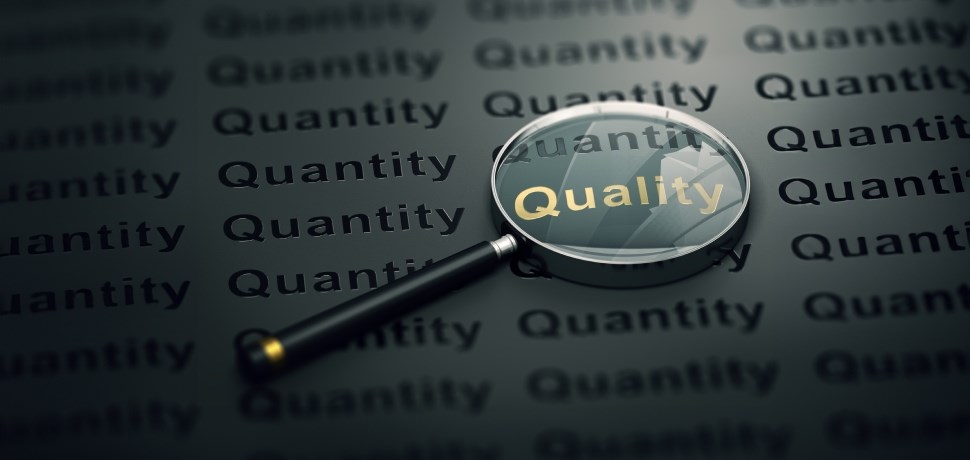
The case for Quality Investing
Andrew Padoa highlights why Sasfin Wealth believes that investing in quality growth companies globally gives our clients the best opportunity for long- term wealth generation.
Read more