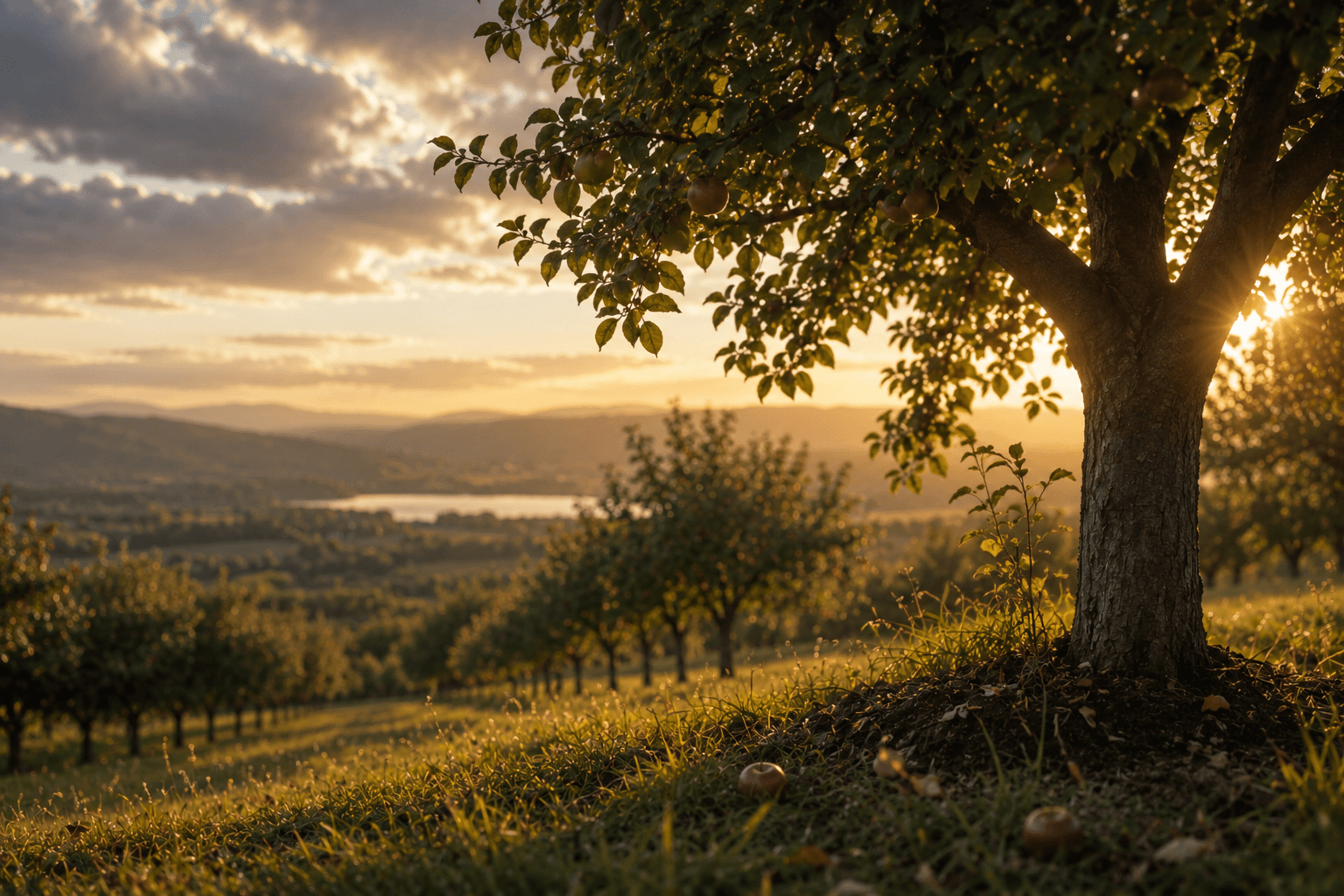
Read more to discover why patience may be investing’s last true advantage in changing markets.
There is an old proverb, older than any market, that says a society grows great when old men plant trees whose shade they will never sit in.
I have been thinking about what it actually costs to plant such a tree. Not the price of the sapling, which is trivial. The cost is something else entirely. It is the daily act of tending something that gives you nothing back. The orchardist waters ground that looks the same in the evening as it did in the morning. He prunes branches that bear no fruit this season, or the next, or the one after that. His neighbours, meanwhile, are harvesting. Their fields produce every year, visibly, measurably. His produces silence.
And then, somewhere in the second decade, the arithmetic inverts. The orchard begins to yield more in a single season than the annual field ever could, and it does so without being replanted, without new labour, without new capital. The trees do the work now. The orchardist's task shrinks to the hardest job of all: not interfering.
The last edge left
Markets have become very good at eliminating advantages. The informational edge is gone; the satellite counts the cars in the parking lot before the retailer does. The analytical edge is fading, as a thousand brilliant minds run the same models on the same data and arrive, unsurprisingly, at the same price. What remains is the one advantage that cannot be arbitraged away, because it is not a form of knowledge at all. It is a form of willingness.
The willingness to hold a position through the years when it produces silence.
Most of the capital in the world cannot do this. Not because the people managing it are unintelligent. They are often the most intelligent people in the system. But they are measured quarterly, compared monthly, and redeemed daily. A fund manager who underperforms for three years while his orchard matures will not be there in year four to harvest it. The structure of the industry forces even the most patient minds to farm annual crops. This is not a flaw in the people. It is a flaw in the clock they are handed.
Which means that anyone who can genuinely hold a longer clock, whether a family, a business owner, or an investor whose capital answers to no committee, is not competing with the market at all. They are competing in a different event, one with remarkably few entrants.
The tree does not check its own height
Consider what a great business does over twenty years. A company that compounds its intrinsic value at fifteen percent does not feel dramatic in any given quarter. It reports, it reinvests, it widens its moat by degrees invisible to anyone watching daily. Then you look up after two decades and the position has grown sixteen fold. Not through any single brilliant decision, but through the absence of a thousand small interferences.
Here is the discomfort: the years that matter most are the ones that feel the worst. The orchard's most important growth happens underground, in the root system, precisely during the seasons when nothing appears to be happening above the soil. An investor who digs up the tree every winter to inspect the roots will own a dead tree. An investor who sells the compounder in year six because year five was flat will have paid the full cost of the orchard and received none of the fruit.
The market will offer you a price for your trees every single day. This is presented as a benefit. Liquidity, they call it. But daily prices are a temptation dressed as a service. The orchardist has no ticker for his trees, and this is the great secret of his patience: he is never asked, at 9am each morning, whether he still believes in photosynthesis.
Whose shade is it, anyway?
There is a version of long-termism that is really just deferred selfishness. I will be patient now so that I may be rich later. It works, as far as it goes. But the deepest form of the discipline is the one in the proverb: planting for someone who is not you.
I have noticed something in the families who manage money well across generations. The portfolios that survive are almost never the ones optimised for the current holder. They are the ones structured around a question the holder will not be alive to answer: what will this be worth to a child who has not yet been born? That question does something strange and useful to decision-making. It strips out the noise automatically. The election, the rate cycle, the currency's bad quarter. None of it survives contact with a fifty-year question. What survives is only the fundamental one: is this a tree that will still be bearing fruit when someone else is sitting in its shade?
And here is the paradox the orchardist eventually discovers. In planting for someone else, he receives something himself. Not the fruit, but the freedom. Freed from the harvest schedule, he stops farming anxiously and starts tending calmly. The quality of his decisions improves precisely because he has removed himself as their beneficiary. The shortest path to investing well over your own lifetime, it turns out, is to invest as though your lifetime were not the point.
The annual farmer and the orchardist stand at the same fence, on the same soil, under the same sky. One of them is asked every season to be right. The other is asked only once, at the moment of planting, and then asked, for twenty years, merely to be still.
Rumi wrote: "Patience is not sitting and waiting, it is foreseeing. It is looking at the thorn and seeing the rose."
The orchard is already in the seed. The shade is already in the sapling. The only question the long-term investor must answer is whether he can see it there, and, having seen it, whether he can bear to leave it alone.
Andrew Padoa
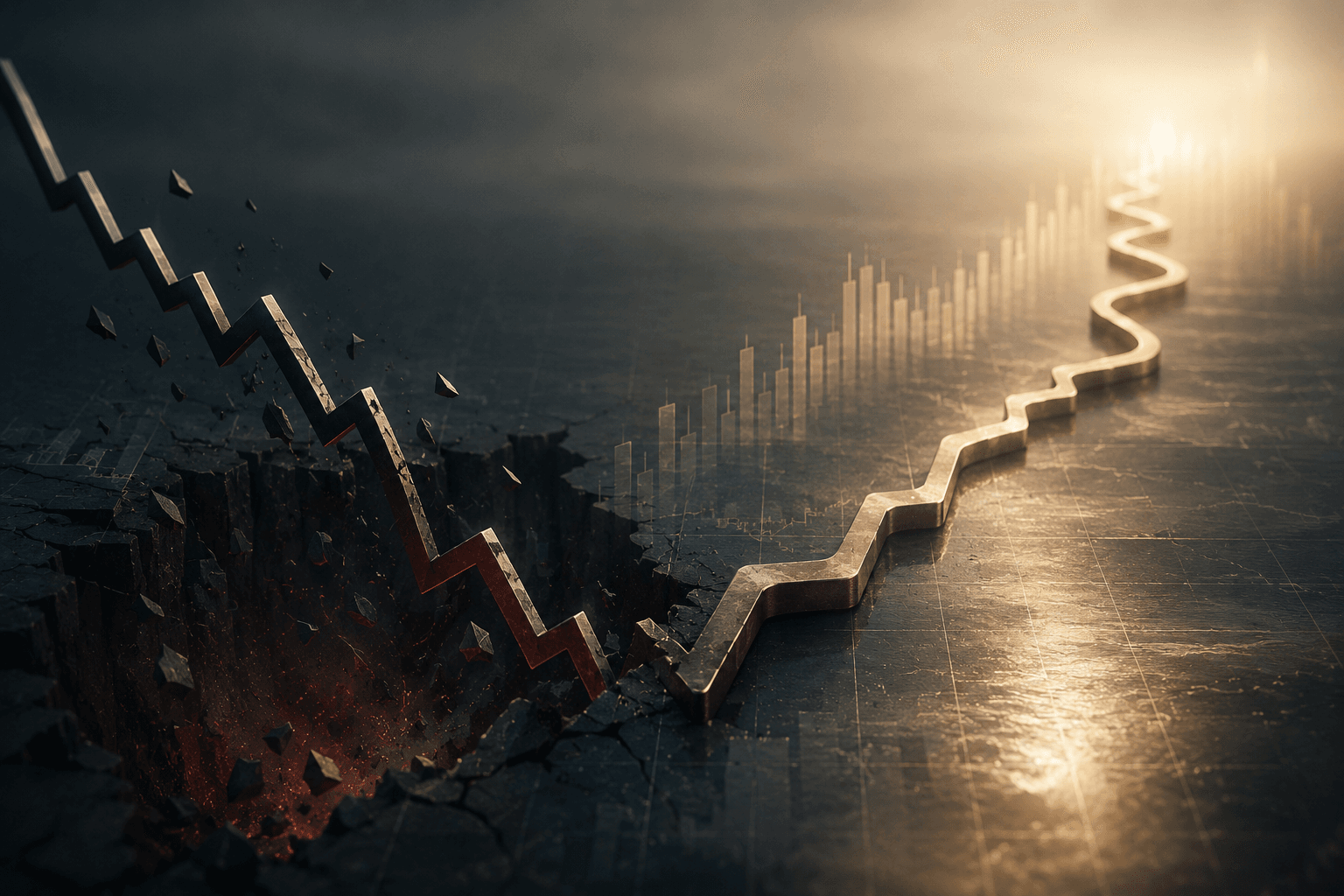
What the minus sign knows | Otto1890
Why protecting capital matters more than chasing spectacular returns across volatile markets.
Read more